
Reclaimed water in industry – the Blue Bridge concept
Water scarcity, climate change and the growing demand for water in industry mean that water recovered from wastewater – including domestic wastewater – following advanced treatment is becoming an alternative source of process water. The expert will discuss the concept of reclaimed water and its potential applications. In modern systems, water recovery rates can reach over 80–98 per cent thanks to the use of RO (Reverse Osmosis) and ZLD (Zero Liquid Discharge) technologies, which play a key role in water treatment and wastewater management. The speaker will highlight the main barriers to implementation, such as variations in water quality, the presence of contaminants, high capital and operating costs (CAPEX/OPEX), microbiological risks, regulatory requirements and public acceptance. He will also outline the potential applications of reclaimed water in industry, including in cooling processes, washing, fuel and hydrogen production, pressure testing, as well as in the remediation and reclamation of degraded sites. He will emphasise the importance of treatment technologies and the role of the end-user in determining quality parameters. During the presentation, the speaker will emphasise that the implementation of solutions depends on investment and operational costs, as well as on an assessment of environmental impact, in order to avoid deteriorating the condition of other environmental components; furthermore, the integration of water recovery into industrial processes is a key element of strategies for sustainable development and adaptation to climate change.
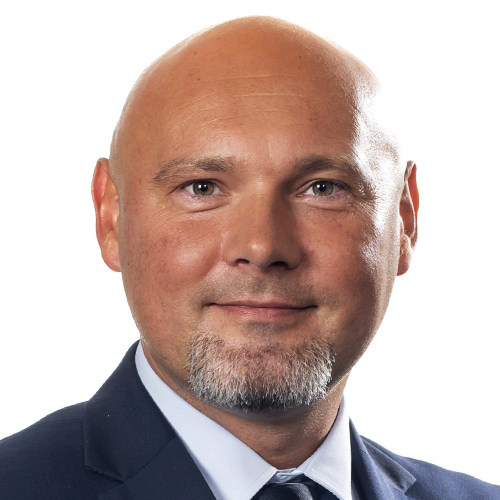
Engineer, holder of a postdoctoral degree in engineering and technical sciences. Expert in the fields of environmental protection and natural resources, as well as water and wastewater management and energy. In 2000, he graduated from the Faculty of Civil Engineering, Mechanics and Petrochemistry. He has completed postgraduate studies in the following fields: Financial Management and Marketing, Project Management, Energy Auditing, Gas Turbines and Combined Cycle Systems, and Process Safety. He has also completed an MBA. He holds full building qualifications in the design and supervision of works, as well as energy sector qualifications in the operation and supervision of energy installations.
Between 2000 and 2014, he worked at the Warsaw University of Technology, where he carried out research into environmental protection and prepared studies for the refining and petrochemical industries – which formed the basis for opinions and expert reports – as well as teaching students. He is the author and co-author of over 100 scientific articles and publications. From September 2009 to August 2018, he served as Director of the Environmental Protection Office at PKN ORLEN. Between 2018 and 2022, he served as an expert in the role of a board member responsible for operations, then as Chief Operating Officer and Director of Research and Development for Alternative Energy Sources, and currently serves as Executive Director for the Environment. He is President of the Płock branch of SITPChem (Association of Engineers and Technicians of the Chemical Industry) and a member of the SITPChem Executive Board. He is also a member of the Mazovia Regional Chamber of Civil Engineers and the Polish Chamber of Civil Engineers. He was appointed by the Minister to the Construction Products Council. He served as Alternate Director at The European Petroleum Industry Association. He is a member of the Responsible Care Programme Committee and a member of the Council of the Polish Chamber of the Chemical Industry. He serves as Chairman of the Council of the Mazovian Hydrogen Valley Cluster.