
Conference Agenda
*The programme may still be subject to slight modifications.
8:00 – 9:00
Registration of participants
Panorama
Level: Basic (practical) After the workshop, participants: The Role of Flushing in Trenchless Technologies – A Practical Foundation Composition of the wash water and water quality Basic specifications and on-site inspection Selecting a filter based on soil conditions The most common lubrication problems in HDDs Organizing work with a scrubber – best practices Interactive session Participants receive a certificate of attendance for the workshop. 9:00 - 13:00
Slurry Pipes in Trenchless Construction Technologies (HDD, Microtunneling, Direct Pipe) – Practical Basics for Contractors and Engineers
Intended for: Contractors, operators, engineers, supervisorsWorkshop objective:
Training program:
Speakers:

Jacek Jaworski

Rafał Leśniak
Introduction Costly mistakes during the preparation of a bidding process The contract presents both risks and opportunities for the smooth implementation of a trenchless project Key provisions of contracts for trenchless projects that may give rise to disputes: Best practices in trenchless construction projects Workshop component – engaging participants in a joint analysis Summary Best practices = cooperation between parties / mutual respect / alternative dispute resolution 9:00 - 13:00
Best practices in contracts for trenchless projects – the first step toward avoiding disputes
Speakers:

Łukasz Kosmala

Tomasz Latawiec

Michał Siejda
13:00 – 14:00
Lunch break
Orangery, Granary
14:00 – 16:00
Plenary Session
An expert will summarize GAZ-SYSTEM S.A.’s contribution to the development of the trenchless technology industry over the past 15 years. The discussion will cover, among other things: The speaker will also highlight the strategic investments that have been carried out using trenchless technologies to diversify gas supplies and enhance the country’s energy security. The presentation will focus on the potential use of drones for assessing the technical condition and monitoring selected elements of underground infrastructure, such as manholes and culverts. Solutions enabling safe operation in confined spaces and under conditions of limited visibility will be discussed. The speaker will also present the application of numerical techniques and artificial intelligence in image analysis and the interpretation of measurement results used to assess the technical condition and monitor structures. The presentation will highlight the experiences of Kraków Waterworks in the field of modern sewer system inspection and diagnostics, with a particular focus on the implementation of digital technologies in operational processes.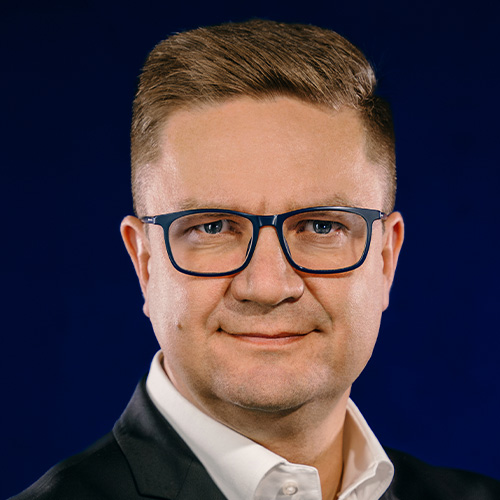
Paweł Kośmider
Opening of the conference

Roland Kośka
20 Years of Trenchless Technology in GAZ-SYSTEM S.A. Projects – Standards, Designs, Processes, and Their Impact on Market Development

Prof. Mirosław J. Skibniewski
Automation and Robotics in Construction and Underground Infrastructure

Prof. Dr.- Ing. Paweł Popielski
The Use of Drones in Assessing the Technical Condition of Wells and Culverts

Bartłomiej Mazela
Digital Techniques in Sewer System Inspection
The presentation will discuss a fundamental shift in the approach to inspecting underground infrastructure—from methods requiring direct entry into sewers and visual assessment to remote, digital measurement systems that ensure high precision, repeatability, and workplace safety.
The presentation will cover key technologies—such as CCTV systems, 3D scanning, LiDAR, and sonar—that support comprehensive data collection on the technical condition of the network.
The role of digitalization in the transition from reactive inspections to a data-driven approach—enabling more informed operational decisions and effective infrastructure management—will be highlighted. Directions for further development will also be outlined, including data integration, automated analysis, and the creation of consistent digital models of sewer networks. 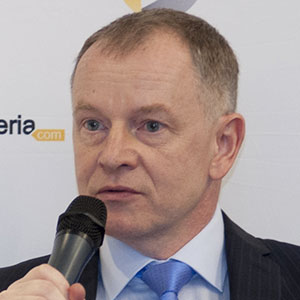
Mirosław Cecuga
The Flyability ELIOS 3 drone with a 4K camera and LIDAR sensor, the Pipetronics e-Cutter light mobile electric cutter, iPEK cameras with WinCan WEB software featuring AI assistance and drone inspection support—clear signs of an advanced digital transformation process in the field of sewer network diagnostics and trenchless technology.
Orangery
16:00 – 16:45
Coffee break – exhibitions on view
Panorama
16:45 – 17:30
Special guest

Krzysztof Wielicki
A good team equals success: The importance of teamwork, illustrated by an expedition to Mount Everest and the leader’s charisma.
Orangery
19:30 – 23:30
Barbecue Party
Granary
9:00 – 11:20
Trenchless Construction session
Although trenchless technologies, such as HDD and Direct Pipe, are particularly impressive—mainly due to the lengths of the boreholes achieved—microtunneling and pipe jacking are used much more frequently in terms of the number of projects completed. For the gas transmission network operator GAZ-SYSTEM alone, 102 crossings were completed using HDD and Direct Pipe technologies between 2016 and 2025, while the number of projects using microtunneling, horizontal directional drilling, and pipe jacking exceeded 1,300. Interestingly, when looking at the total length of the completed installations, these figures are similar—73.5 km for HDD and Direct Pipe versus 78 km for microtunneling and pipe jacking. HDD is one of the key trenchless techniques used to install pipelines, cables, and conduits beneath land and water obstacles. Despite its many advantages, the process remains complex, time-consuming, and risky. The presentation will focus on the documents an investor must obtain in order to legally construct trenchless crossings for gas pipelines. It will also address issues related to amendments to existing decisions and agreements resulting from unforeseen circumstances that arise during the course of the project. This presentation will introduce the method of electrical resistivity tomography (ERT). Its advantages, limitations, and measurement procedures will be discussed, and selected case studies described in the literature will be presented, including investigations conducted in the vicinity of projects being implemented in Warsaw. The presentation will also include the authors’ own results from studies conducted in an urban environment, aimed at characterizing the geological structure to a depth of approximately 90 m below ground level. It will be demonstrated that the ERT method enables the rapid acquisition of high-quality data, particularly useful in the case of subsoil requiring precise differentiation between sandy and clayey layers, characterized by a distinct resistivity contrast. For this reason, this technique is widely used in modern geotechnical engineering, allowing trenchless projects to be adapted to actual soil and groundwater conditions as early as the initial stages of project implementation. 
Dr.- Ing. Jan Ziaja, prof. AGH
Microtunneling – Theory and Practice
For this reason, among others, the AGH expert decided to provide an overview of these technologies and the design process involved. As part of the analyses conducted, the values of thrust forces determined using commonly applied empirical and static methods were compared with the actual parameters obtained during the implementation of specific projects. The results of the analyses and the conclusions drawn from them will be discussed in the presentation. 
Robert Osikowicz
Potential Optimization of the HDD Drilling Process – Opportunities to Reduce Time, Costs, and Operational Risk
The presentation will discuss potential approaches to optimizing the drilling cycle—from the trajectory planning stage through to the final installation of the pipeline.
The main areas of optimization include borehole geometry, tool and downhole equipment configuration, drilling parameters, borehole hydraulics, and process quality management.
Krzysztof Antczak
Legal and regulatory documents in the process of constructing trenchless crossings

Aleksander Rajkowski
Electrical Resistivity Tomography for Rapid and Non-Invasive Soil Characterization – Selected Application Examples
The co-authors of the paper will be:
dr hab. inż. Paweł Popielski, prof. PW., Wydział Inżynierii Środowiska, Politechnika Warszawska,
dr inż. Łukasz Kaczmarek, Wydział Inżynierii Środowiska, Politechnika Warszawska. 
Marcin Ficenes
Bezwykopowe technologie polimerobetonowe w budownictwie drogowym i sieciach zewnętrznych – realne case studies oraz mierzalne korzyści projektowe

Marcin Firkowski
HDD Design 5.0 – a new approach based on the 5th edition of the DCA guidelines
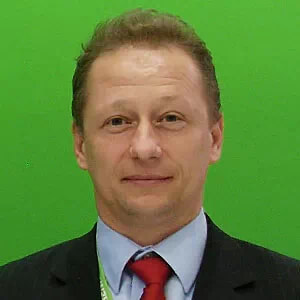
Wojciech Zatyka
E-POWER PIPE Trenchless Technology for Laying High-Voltage Networks

Tomasz Mazur
Pushing the Boundaries of Direct Pipe Technology: GGT Solutions S.A. Case Studies from the Past 10 Years
Orangery
11:20 – 12:20
Coffee break – tour of the exhibition
Panorama
12:20 – 14:20
Trenchless Renovation session
The wide range of diagnostic methods currently available stands in contrast to the situation encountered in practice, where the resources employed are often insufficient to properly design solutions for pipeline rehabilitation or conduct acceptance testing. At the same time, the opposite situation may arise, where testing is conducted at a cost that is disproportionate to actual needs. In response to these issues, this presentation will explore pipeline diagnostics from the perspective of the needs and expectations of the various parties involved in network maintenance and the technical rehabilitation process. This presentation will address issues related to the maintenance, modernization, and restoration of the technical condition of existing underground infrastructure components located along railway lines situated on embankments. Particular attention will be paid to culverts, utility tunnels, and drainage systems, whose technical condition is of significant importance for the safety, durability, and operational reliability of railway infrastructure.
Jakub Wysocki
The Role of Trenchless Technologies in Adapting Infrastructure to Climate Change in the City of Bydgoszcz

Radek Michalik

Mr Eoghan O’Brien
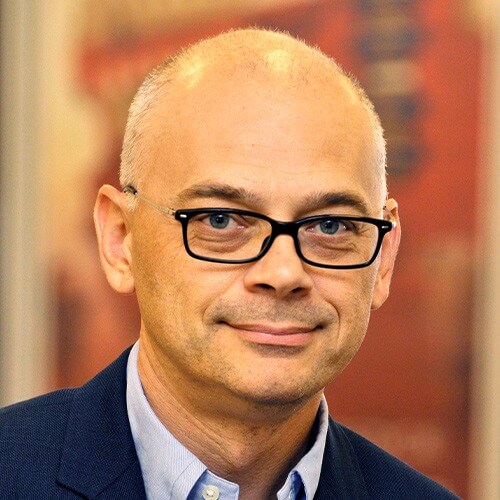
Przemysław Szkudlarczyk
19th-century Victorian sewer pipes in London – trenchless rehabilitation after 150 years
Dr.-Ing. Bogdan Przybyła
Inspection of sewer and water supply pipes – needs and expectations

Prof. Dr.- Ing. Adam Wysokowski
The needs and possibilities of technical renovation of underground railway infrastructure
Railways in Poland are currently undergoing extensive modernization, which creates a need for modern rehabilitation technologies that allow work to be carried out quickly, effectively, and with minimal disruption to the existing track layout and the surrounding area. In this context, trenchless technologies are of particular importance, including the CIPP method, which involves the rehabilitation of underground conduits and structures by installing a new, watertight, and durable liner inside the existing structure.
The use of CIPP technology makes it possible to restore the required operational and structural parameters of culverts, utility tunnels, and drainage systems without the need for extensive earthwork. This minimizes the need to disturb embankments and ballast, and also reduces the risk of disruptions to rail traffic. Another significant advantage of this technology is the substantial reduction in project completion time compared to traditional methods, which is particularly important on active or modernized railway lines.
The expert will point out that the use of trenchless technologies in the renovation of underground railway infrastructure can serve as a sensible complement to comprehensive modernization programs. It allows for the effective utilization of existing structures, reduces costs and minimizes the disruption caused by construction work, improves the durability of the infrastructure, and enhances the safety of railway operations. The implementation of such solutions aligns with the current technical and organizational needs of the Polish railway sector, which are focused on a modern, durable, and efficiently modernized transportation infrastructure.
Orangery
14:20 – 15:20
Lunch break
Orangery, Granary
15:20 – 17:00
Technology shows
Chemfor Poland will present a practical approach to effective drilling fluid separation in trenchless projects. During the presentation, attendees will learn about solutions that combine advanced drilling fluid chemistry with modern Derrick® mechanical separation systems, which help increase work efficiency, reduce operating costs, and significantly minimize waste.
Łukasz Lisowski
The Use of Unmanned Aerial Vehicles in the Investment Process. Photogrammetric and inspection flights—including beyond visual line of sight

Jan Przybyła
Innovative UV LED technology – curing demonstration using the RIG DN 300 mobile LED system
Adam Żelażewski
Innovative and efficient – the state-of-the-art Kaiser Aquastar IV vehicle with a water recovery (recycling) system. The compact KAISER MORO ELEGANCE 2.0 suction and flushing vehicle. The TYTAN 2.0 high-pressure unit mounted on a van-type vehicle. Ritec – a system for sewer inspection and monitoring. Sewer cleaning heads from the Swiss brand ENZ.

Tomasz Piekart
ROM EcoNomic in Practice – A Demonstration of High-Pressure Sewer Cleaning Technology

Łukasz Siąkała
Effective slurry separation in practice: A presentation of Chemfor & Derrick technology
The presentation will include both a theoretical component and a live demonstration of the equipment. The most important challenges associated with the implementation of HDD and microtunneling projects will be discussed, as well as examples of technology implementations in demanding soil conditions. Particular attention will be paid to the synergy between a properly selected drilling fluid and the separation system, which translates into greater durability of drilling tools and improved project economics.
The meeting will conclude with a Q&A session and individual technical consultations with experts from Chemfor Poland.
Plein air
20:00 – 3:00
Gala ceremony, TYTAN 2026 awards

Orangery
10:00 – 13:00
Technical trip
A hike through the Ciasne Skałki Gorge to Pieskowa Skała Castle in Ojców National Park

Trip