
Monitoring of flap anchors during the construction of the T5 Baltic Hub terminal
Hydrotechnical projects implemented in Poland in recent years are undertaken with increasing boldness, momentum, and technical scale. One such project is the construction of the Baltic Hub. The paper presents the technical background of flap anchor monitoring carried out during intensive dredging, backfilling, and assembly works—under variable load conditions in marine environments.
A comprehensive approach to anchor instrumentation using string strain gauges, measurement system configuration, and data acquisition and quality control will be presented. Based on actual results from selected anchors, axial forces and bending moments in subsequent stages of implementation will be discussed, as well as their correlation with the work schedule and FEM calculation assumptions.
This case study shows how monitoring can become a tool for engineering verification of the design model, support for executive decisions, and a source of knowledge about the actual operation of the wall-anchor system.
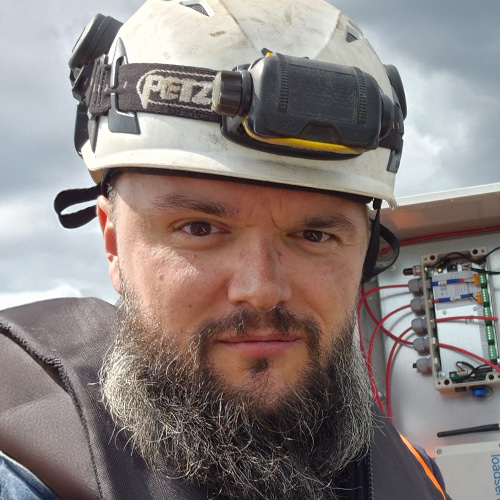
A graduate of the AGH University of Science and Technology in Krakow, majoring in geophysics at the Faculty of Geology, Geophysics, and Environmental Protection. He has been with DMT Engineering since 2015.
He specializes in vibration monitoring and analysis of the impact of dynamic forces on critical infrastructure, including gas pipelines. He has implemented permanent monitoring systems for large-scale structures and engineering facilities, including the roof of the GKS stadium in Katowice and the bridge over the Bug River in Granne.
He is a member of the DMT development department and participates in international research and engineering projects carried out by the company in Denmark and Germany. In his work, he combines his geophysical education with engineering practice, co-creating and developing methods for diagnostics and monitoring of structures.