Speakers and presentation topics
Anna Adamek
The use of trenchless technology in the rehabilitation of water and sewage networks – a case study of the city of Katowice. Methods, advantages, examples of rehabilitation.
The presentation will provide an overview of the activities of Katowickie Wodociągi S.A. – a company with a long tradition, implementing a stable and responsible strategy for the development of water supply and sewage infrastructure. The condition and specific characteristics of the network in Katowice will be discussed, as well as the consistent use of trenchless technologies in the modernization of water and sewage systems over the years. The presentation will include an overview of selected projects in the city, enriched with case studies showing unexpected operational challenges. Finally, the company’s future development directions and plans will be presented.
An environmental engineer by education. From the beginning of her professional career, she has been associated with Katowickie Wodociągi S.A., where she gained experience as a specialist in the technical department with a very wide range of competences – from working with individual customers on issuing connection conditions to participating in the implementation of complex infrastructure projects in Katowice.
Over the years, she has worked under the guidance of experienced professionals, gaining practical knowledge in the field of investment preparation and implementation from an investor’s perspective. She is particularly active in tasks related to the modernization of water supply and sewage systems, including those implemented using trenchless technologies, which results from the specific nature of urbanized city fabric.
She participated in the entire investment process – from selecting sections for modernization, through preparing the conditions for the investment, reviewing project documentation, to participating in the acceptance of construction works. Since September 2020, she has been the deputy head of the Network Department, constantly expanding her knowledge and professional skills.
On a daily basis, it cooperates with local government units, designers, and construction contractors, as well as with Katowickie Inwestycje S.A. – a key partner in the implementation of investments in the city of Katowice – and with industry companies.
At work, he focuses on professionalism, a comprehensive approach to tasks, and skillful and practical problem solving. He attaches great importance to building long-term relationships based on trust, cooperation, and the exchange of experiences.
Michał Andrzejewski
One hundred issues of Trenchless Engineering, representing over twenty years of observing trenchless technologies. What has happened during this time?
In this paper, I will attempt to present the development of trenchless sewer repair technologies over the last twenty years.
Graduated from the Szczecin University of Technology, Faculty of Transport Engineering and Economics. Since 1986 he has been running his own company and since 1992 he has been a member of the management board of Gamm-Bud sp. z o.o. dealing with the supply of equipment and technology for the water, sewage and telecommunications industry. He is the author of more than 150 publications in the trade press and co-author of the book ‘Methods for laying telecommunications cables in underground urban infrastructure facilities’. In addition, he is the designer of machines for blowing fibre optic cables and sewer manhole repair systems.
Translated with DeepL.com (free version) Author of the forthcoming book ‘Construction of modern telecommunications networks using fibre-optic cable injection technology’.
Kees den Besten
Next steps in sustainable Relining – market drivers & resin developments
As a chemical engineer, he started his career in 1988 at DSM Composite Resins, where for 22 years he held various R&D, marketing and technical service roles in UP and VE resins, with a strong focus on chemical resistance and CIPP. Since 2010, Kees was employed by Owens Corning in the technical fabrics division in various positions in technical service, product development, marketing, project management and sales in CIPP and Wind. In 2022, he joined AOC as special project manager responsible for resins in corrosion and carbon fibre applications and CIPP/relining segment manager. He has more than 35 years of experience in the composites industry working with resins and glass fibres, with a strong commitment to the CIPP industry.
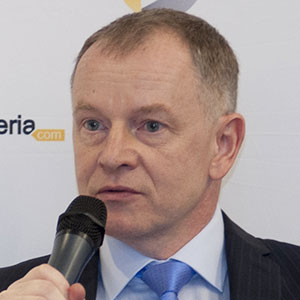
Mirosław Cecuga
Selected new products on the market of trenchless rehabilitation technology available from Sezam Instal
The e-Cutter light mobile electric robot from Pipetronics, the ELIOS 3 drone from Flyability with a 4K camera and LIDAR sensor, and WinCan software with AI assistance—these are clear signs that diagnostics and trenchless technology for sewer networks are moving to a significantly higher level.
The presentations will feature an excellent solution from Swiss company Flyability that is changing the current approach to sewer and manhole diagnostics: a drone that records 4K images and renders (rendering) the sewer in 3D using a LIDAR sensor with a resolution of over 1 million pixels per second. The presentations will feature an excellent solution from Swiss company Flyability that is changing the current approach to sewer and manhole diagnostics: a drone that records 4K images and renders (rendering) the sewer in 3D using a LIDAR sensor with a resolution of over 1 million pixels per second. The possibility of using AI for diagnostic description of the sewerage system using WinCan software will also be highlighted.
Miroslaw Cecuga runs the company Sezam Instal together with his brother Radosław. He has been closely involved with trenchless technologies for almost 35 years. A staunch advocate of using epoxy resin and electric cutters. Co-author of the concept of CIPP as an everyday tool in state-of-the-art Polish waterworks.
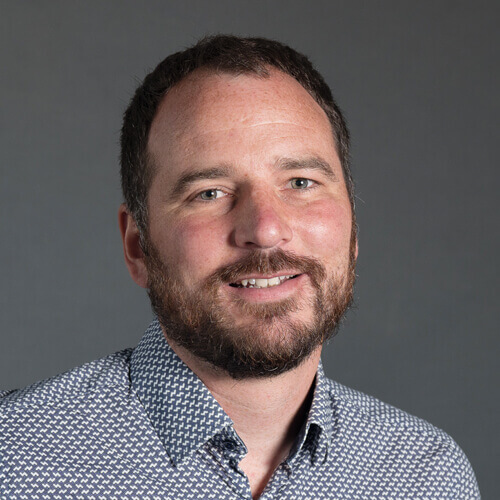
Otakar Cigler
Rehabilitation of pressure pipelines – Primus Line system. Presentation of the method based on projects completed in Poland.
Specialist in trenchless technology with 14 years of experience in rehabilitation of sewers and pipelines using various methods. Graduate of the Faculty of Civil Engineering at the Technical University of Ostrava. He is certified and a member of the Czech Chamber of Authorised Engineers and Technicians operating in the construction industry. Authorised technician in the specialisation of hydraulic engineering.
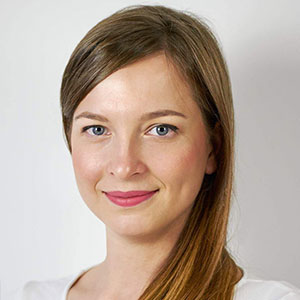
Anna Danek
Effective investment planning using trenchless technologies: strategies for minimizing project and execution risk
The presentation discusses effective investment planning using trenchless technologies and ways to minimize design and construction risks. It shows where to start the task preparation process, how to analyze needs, and how to select the right technology. It explains the rules for corresponding with property owners and the importance of early site agreements. It shows how to create a risk analysis, diagnose potential threats, and reduce design errors. In the last part, it indicates how to proceed at the execution stage to ensure efficient implementation, quality control, and proper cooperation between participants in the construction process.
Translated with DeepL.com (free version)
A graduate of Environmental Engineering at the Poznań University of Technology, she has been involved in trenchless technologies since the beginning of her professional career. She gained experience at Terlan as a construction engineer, where she was responsible for the formal and legal aspects of investments involving sewerage network renovation technologies.
The next stage of her professional career is connected with the Investment Department of AQUANET, where since 2017 she has been managing projects related to the renovation of water supply and sewage systems, as well as large infrastructure projects in the city center, covering both of these systems.
For a year, he has been the leader of the team responsible for designing and implementing renovation tasks, investments in rainwater management, and projects carried out in cooperation with the City of Poznań and other municipal companies.
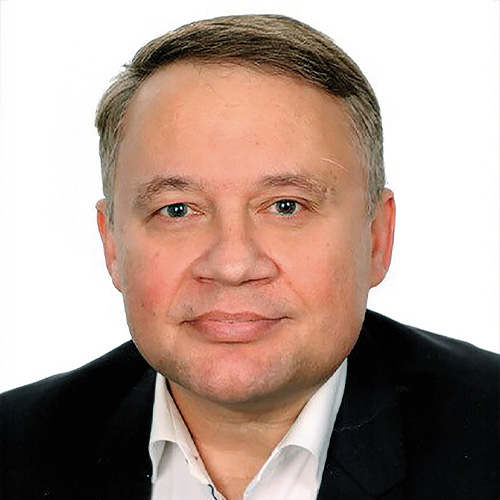
Tomasz Daniłoś
Debate – From Problem to Solution

Krystian Frank
The uniqueness of gravity drilling technology – compactness as a response to space constraints in trenchless network construction
The presentation addresses an issue that an increasing number of designers and contractors involved in trenchless works are encountering in practice – the lack of space to apply available technologies. In conditions of dense urban development, narrow road lanes, extensive underground infrastructure, and limited access to wells, it is increasingly not the technical parameters of devices, but their dimensions that determine the feasibility of an investment.
The presentation will discuss why many commonly used trenchless technologies require space that is often unavailable in urban environments, and what consequences this has for the design and construction phases. Particular attention will be paid to situations where classic solutions are no longer possible, not for technological reasons, but purely for geometric ones.
Against this background, a technological approach based on maximum reduction of the dimensions of the device and working facilities will be presented, enabling work to be carried out directly from well to well. The presentation will show how compactness is becoming a key technical parameter influencing the ability to maintain precision, work safety, and compliance with design specifications.
Instead of comparing technologies in terms of power or performance, the presentation will focus on the actual field conditions in which the technology must fit—not the other way around. Examples will be presented of locations where limited working space determines the choice of a trenchless method or leads to the need to seek non-standard solutions.
The presentation is technical and problem-oriented. Its aim is to show that in modern infrastructure construction, innovation increasingly involves adapting technology to the site of implementation rather than increasing the scale and size of equipment. Kompaktowość została tu potraktowana nie jako cecha marketingowa, lecz jako konkretna odpowiedź na ograniczenia, z którymi branża mierzy się na co dzień.
An expert in trenchless technology, specializing in gravity drilling and the construction and modernization of water supply and sewage networks. A graduate of Gdańsk University of Technology, where he completed a degree in municipal and sanitary engineering, gaining solid engineering training in the field of underground infrastructure.
Since the beginning of his professional career, he has been involved in the water and sewage industry, combining design knowledge with practical experience. He gained experience both as an entrepreneur providing specialized water and sewage services and as an expert representing MIDO sp. z o.o. – one of the leaders in innovative solutions in trenchless drilling technology. He is the co-author of numerous analyses and educational materials on the use of gravity drilling rigs and the optimization of network construction processes in difficult soil and urban conditions.
In his work, he focuses on the practical effectiveness of solutions, safety, technological precision, and the development of methods that minimize interference with infrastructure and the environment. He regularly collaborates with contractors, designers, and investors, supporting them with his technical knowledge and experience gained from numerous projects in Poland.
He is recognized as a specialist who combines engineering knowledge, field experience, and a modern technological approach, making him one of the leading practitioners in the field of gravity drilling and trenchless technology.
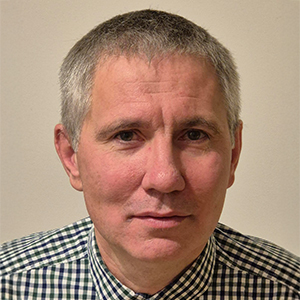
Piotr Fura
Size matters – renovation of large-scale collectors. A case study based on the example of the city of Wrocław
The renovation of large-diameter collectors, characterized by large diameters or significant cross-sections in the case of non-circular profile channels, is one of the most demanding technical and technological challenges in the operation of sewage systems. This is due, among other things, to the limited availability of specialized trenchless technologies, the need to carry out work in difficult spatial conditions, and high health and safety requirements during work carried out on an active sewerage network.
Significant structural loads, often large foundation depths, and varying technical conditions of structures require an individual design approach, close supervision of the works, and precise quality control at every stage of the renovation process.
An additional challenge is the need to maintain continuity of sewage collection throughout the entire period of the works, which often involves the construction of complex bypasses or, if the technology used allows it, carrying out works “under flow.” Renovations of large-size collectors are usually carried out in dense urban areas, under streets and transport routes, often while maintaining active vehicle traffic, which significantly increases the complexity of the work and organizational requirements.
In the case of combined sewers, an additional aspect is ensuring reliable wastewater collection during rainfall, which requires taking into account variable and often very high flows throughout the entire renovation process.
An expert with many years of experience in supervising the operation, maintenance, and repair of water and sewage networks and facilities. He has collaborated with local government units, companies in the industry, and universities, as well as with project contractors and construction companies.
During his work at MPWiK S.A. in Wrocław, he supervised many strategic projects. He considers his own project to build retention reservoirs, which successfully protect the residents of Wrocław from heavy rains and are among the largest sewage management facilities of this type in Poland, to be the most important. The experience he has gained in the implementation of key projects allows him to understand the challenges associated with managing large technical and investment projects.
An important professional experience for him was serving as head of the internal crisis management team at MPWiK S.A. in Wrocław during heavy rains and flood threats to the city of Wrocław in September 2024. He is also the initiator of a cooperation agreement with sixteen large and largest water supply companies from all over Poland in the field of support during crisis operations. He is also a recipient of the Distinguished Graduate of the Wrocław University of Technology award.
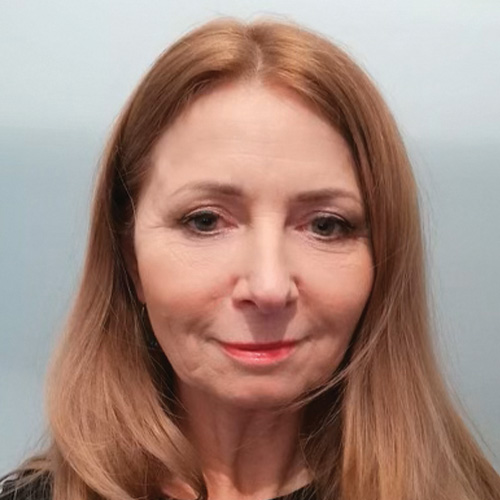
Jolanta Kaczmarek
Innovative methods of trenchless renovation of sanitary engineering structures
Trenchless renovation of sanitary engineering facilities based on PREDL technology and methods provides modern, effective, and durable solutions to problems related to the technical degradation of sewerage networks and facilities. These methods allow for the rehabilitation of existing infrastructure without the need for excavation, which significantly reduces interference with existing infrastructure, lowers costs, and shortens the time needed to complete the investment.
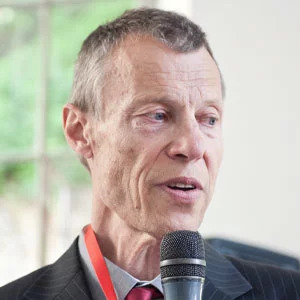
Dr inż. Andrzej Kolonko
Sewer pipe cleaning strategy
The basic measure ensuring the efficient functioning of sewer pipes is their periodic cleaning. This allows for maintaining hydraulic efficiency and enables a proper assessment of the technical condition during inspections. The paper will present the results of research aimed at introducing a cleaning strategy based on operational experience and knowledge of the condition of the sewerage network. The optimization of cleaning intervals is aimed at reducing costs, as unnecessary sewer cleaning is eliminated.
Translated with DeepL.com (free version)
A graduate of the Faculty of Civil Engineering at Wrocław University of Technology. He specializes in the field of broadly understood underground infrastructure in cities. For many years, he has been the organizational secretary of the international scientific and technical conference entitled “Underground Infrastructure of Cities.” He promotes the dissemination of modern trenchless technologies by participating in specialist training courses. He teaches at the faculties of Civil and Water Engineering, Environmental Engineering, and Architecture at the Wrocław University of Technology. He supervises master’s theses, including one that won an award in a competition organized by PZITB.
Translated with DeepL.com (free version)
Thanks to his excellent command of English and German, he develops cooperation with foreign research centers and companies, which allows him to constantly update his knowledge and pass it on to his students.
He is the author and co-author of numerous publications in domestic and foreign journals, including the books: “Sewer Pipe Structures,” “Microtunneling,” and “Renovation of Water Pipes Using the Cementing Method.” In addition, he is the author and co-author of three patents and a utility model.
Functions performed:
– organizational secretary of the regular conference “Underground Infrastructure of Cities”
– member of the editorial team of the monthly magazine Inżynieria Bezwykopowa (Trenchless Engineering)
– member of the audit committee of the Polish Association of Trenchless Technology
– Member of ITA – AITES Poland (International Tunneling Association)
– Member of EFUC – European Forum on Underground Construction
– Member of PZITB – Polish Association of Construction Engineers and Technicians
– member of the faculty diploma committee
– Member of the Polish Committee for Standardization – Technical Committee 140
Awards:
– He has received numerous awards from the rector, dean, and director of the institute for his scientific, teaching, and organizational achievements.
– 2003 – award for the monograph (co-author) entitled “Sewer pipe structures” at the “Atena” Academic Book Fair, Warsaw 2003.
– 2007 – Award from the Minister of Construction for a monograph (co-author) entitled “Microtunneling,” published by Dolnośląskie Wydawnictwo Edukacyjne.
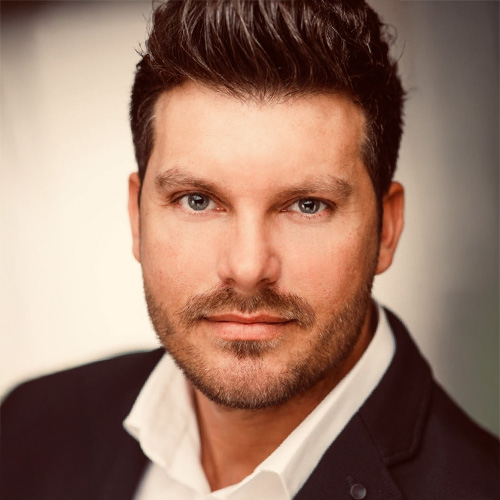
Adrian Koziołek
Innovative methods for renovating and cleaning pressure pipelines

Jacek Kulig
Pipe modules for complete rehabilitation of gravity sewers
Polypropylene modules or pipes as an effective, reliable, and long-lasting alternative for renovations and repairs of gravity sewers.
One might say that where the devil cannot help, polypropylene will!
This is indeed the case in the diameter ranges from DN 160 to DN 500, where modules with very high strength can be inserted into existing, leaky, and severely deformed pipelines to create a completely new channel.
They are extremely durable and essentially act as a new pipe.
An investment for 100 to 150 years that is sure to pay off.
Full rehabilitation of the canal with complete sealing guaranteed.
The installation itself is not complicated either, you just have to see it! See for yourself.
He knows plastic systems inside out.
For over 25 years, he has been providing professional consulting services in the field of plastic pipes and wells.
He explores the practical aspects of their use, design, and installation, ensuring that the proposed solutions are constantly improving and in line with the latest industry trends.

Beata Kwiatkowska
The uniqueness of gravity drilling technology – compactness as a response to space constraints in trenchless network construction
A salesperson and trainer by passion and education, she has been involved in technical marketing and the promotion of engineering solutions in the construction industry for many years. For over five years, he has been developing his career at the Terma Group, which includes, among others, MIDO – leader in trenchless technology. Her work focuses on combining the world of technology with effective communication, so that complex engineering processes become understandable and attractive to industry audiences.
At MIDO, she has been responsible for engineering promotion in the broadest sense for over a year, successfully building the company’s image and popularizing gravity drilling technology. He conducts presentations, training sessions, and demonstration events, combining his expertise with the ability to engage participants. Her actions have significantly contributed to increasing the recognition of the technology and building relationships with key market partners.
At the same time, she plays an important role in Termy’s structures, where she supports the commercial, human resources, and marketing areas. He is responsible not only for promoting services, but also for raising awareness of the Group’s broad portfolio of construction machinery and solutions. She effectively combines technical knowledge with communication skills, enabling her to present complex products in an accessible and inspiring way.
Beata Kwiatkowska is known for her professionalism, energy, and ability to build long-term relationships. Her work provides important support for the development of the MIDO and Terma brands, as well as for the popularization of modern engineering technologies on the Polish market.
Marcin Łukaszewicz
Qualifying pipes for renovation. Is there a perfect solution?
The operation of municipal water supply and sewage systems today faces a number of challenges, including: reducing water losses, reducing network and infrastructure failures, meeting growing regulatory requirements, and adapting to climate change. Using the example of Wodociągi Miasta Krakowa S.A., an integrated approach to network management will be presented, combining technical, organizational, and digital activities.
The presentation will discuss the role of intelligent water supply and sewage management systems that integrate data from SCADA, GIS, billing systems, and hydraulic models operating in real-time and predictive modes. The combination of classic operation with advanced data analytics allows for the stabilization of failure rates despite network development, reduction of water losses, and rationalization of investment and renovation costs.
A graduate of the Faculty of Environmental Engineering at the Krakow University of Technology, specializing in Municipal Engineering. Since 2010, he has been working at the Sewerage Network Department of MPWiK S.A. in Krakow. He specializes in trenchless sewerage network renovations. He currently serves as director of network infrastructure.
Michał Milczarek
Trenchless 4.0 – the digital transformation of the industry
Advancing digitalization is changing the way underground infrastructure is planned, built, and maintained, including trenchless construction projects. The Trenchless 4.0 concept describes this process as a transition from traditional construction methods to an approach based on data, automation, and integrated process management throughout the entire infrastructure lifecycle.
The presentation will show how digital transformation affects the organization of trenchless projects, the production processes of renovation linings, as well as quality control of works and technical and operational decision-making. The key benefits of implementing the Trenchless 4.0 concept will also be discussed, such as increased investment efficiency, reduced technical risk, shorter work times, and reduced costs and nuisance to the environment.
A graduate of the Faculty of Mechanics and Machine Design at Gdańsk University of Technology, specializing in machine design. He developed his professional career in renowned companies such as Centrostal sp. z o.o., Wojskowe Zakłady Uzbrojenia nr 2 (Military Armament Works No. 2) and Bipromasz sp. z o.o., where he gained experience in production management and the implementation of modern technical solutions.
Since 2005, he has been associated with Mazur sp. z o.o., where he served as Production Manager and then Production Director, implementing projects to modernize production lines and optimize technological processes. Since 2018, he has held the position of Production Director and Proxy at POliner sp. z o.o., where he is responsible for the company’s development in the area of production of fiberglass renovation linings and water, steam, and UV-cured polyester nonwovens. He focuses on implementing innovative technologies, increasing production efficiency, and developing the team’s competencies, contributing to the systematic growth of the company’s competitiveness.
Wojciech Możdżeń
Strategic infrastructure management in urban sewerage systems.
Improving sewerage system efficiency through periodic service contracts for cleaning and trenchless rehabilitation. Case study: Craiova, Romania
The contractor’s experience in performing a contract based on a periodic service formula for the trenchless rehabilitation of a gravity sewer system in Craiova, Romania, carried out by Blejkan Srl. A brief description of the tender procedure, contractor selection criteria, and contract details. In the presentation, the speaker will point out the benefits of a periodic service contract for the contracting authority (public water supply company in Craiova, 350,000 inhabitants) and its limitations. He will also share his own opinions and comments on the implementation of this type of contract as a special way of conducting construction works.
Dr inż. Beata Nienartowicz
Politechnika Warszawska
How to interpret and control long-term material strength parameters in acceptance procedures
Some of the materials used for pipeline renovation belong to the group of viscoelastic materials, which means that their strength changes over time. Two strength parameters are used to describe these materials: short-term and long-term.
A proper understanding and interpretation of these parameters is essential to ensure that renovations provide long-term structural safety.
The presentation will explain the meaning of short-term and long-term parameters and their importance for the final result of the renovation.
Key aspects related to the control of these parameters at the acceptance stage will also be discussed.
A graduate and long-time employee of the Faculty of Civil and Water Engineering at the Wrocław University of Technology, currently an assistant professor at the Faculty of Environmental Engineering at the Warsaw University of Technology. Her education and interests focus on trenchless pipeline renovation. In 2008–2018, she was the supervisor and operator of the Mobile Laboratory of Underground Infrastructure of Cities at the Wrocław University of Technology, which allowed her to gain extensive experience in conducting and compiling the results of in situ tests related to the comprehensive assessment of the technical condition of underground infrastructure facilities. She is the author of several national and international publications and the author and co-author of numerous expert reports and technical opinions on the technical condition of underground infrastructure facilities, as well as a licensed and active designer.
In addition to his scientific activities, he focuses his professional activities on increasing efficiency in the planning, design and formal preparation of trenchless pipeline rehabilitation projects. Within IDEANTE, he provides, among other things, services to support investors in the process of preparing investments in trenchless pipe rehabilitation and design services.
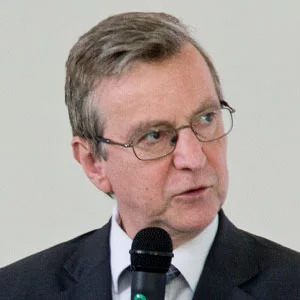
Dr inż. Florian G. Piechurski
Problems with failures and water losses in water supply connections – methods of repair and replacement using trenchless techniques
Water supply connection failures are a growing challenge for operators – in many systems, their number already exceeds the failure rate of distribution networks, and water losses are difficult to locate and repair. The most common types of damage, such as internal and external corrosion or pipe breaks, result from both the quality of materials and workmanship, as well as processes occurring during operation. Accumulated deposits of iron, manganese, or calcium gradually reduce the diameter of the pipes, lowering their transmission capacity. At the same time, progressive corrosion processes lead to a weakening of the pipe structure and an increased risk of failure.
The paper will present current data on the technical condition of connections and the most common causes of their damage. The expert will discuss why, in many cases, it is more cost-effective and efficient to use trenchless technologies instead of traditional open trench replacement. Participants will learn about the key criteria for selecting the right method – from technical and economic to social and environmental – and how proper diagnostics and analysis of the condition of the connection influence further operational decisions.
The presentation will also provide an overview of the most important methods of renovation and trenchless replacement, including the installation of various types of linings. Their advantages will be discussed: reduced earthworks, lower risk of interference with accompanying infrastructure, favorable hydraulic properties, and shorter completion times.
The presentation is aimed at water supply infrastructure managers, designers, and contractors who want to make informed choices about connection renovation methods and minimize the risk of failures and water loss. It is a practical summary of knowledge that will help you make more accurate investment and operational decisions.
Retired lecturer for 41 years at the Silesian University of Technology, Faculty of Environmental Engineering and Power Engineering in Gliwice. Authorised to design and direct works in the field of sanitary networks and installations. Author of numerous publications, projects, expertises and opinions. Member of ZG PZITS and of the main section of water supply and sewage systems.
Privately a grandfather of 4 grandchildren, father of 2 daughters and husband of Alinka for 45 years.
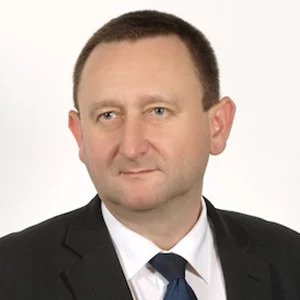
Dr hab. inż. Paweł Popielski – prof. PW
Modern capabilities for monitoring underground infrastructure supported by numerical techniques and AI
The paper will present the possibilities of assessing the technical condition and monitoring of underground infrastructure (sewers and water pipes) using modern numerically assisted techniques and AI. Among other things, it will discuss the possibilities of using fiber optic techniques and contactless technologies based on image analysis. It will present the possibilities of using digital techniques and artificial intelligence to analyze measurement results when assessing the technical condition and monitoring of collectors and water pipes.
Professor at the Warsaw University of Technology, specialist in hydrotechnical construction, water engineering, and the environment. From 2014 to 2020, he served as Head of the Department of Water Construction and Hydraulics, and from 2016 to 2023 , he was the director of the Center for Geo and Hydrotechnical Analysis at the Institute of Applied Research at the Warsaw University of Technology (IBS PW), and in the 2020–2024 term, he served as Dean of the Faculty of Building Installations, Hydrotechnology and Environmental Engineering at the Warsaw University of Technology. He is a member of the Hydrotechnical Structures Section and the High Buildings Team of KILiW PAN, as well as a member of Technical Committee 206 Observational Method; International Society for Soil Mechanics and Geotechnical Engineering (TC 206 Observational Method; International Society for Soil Mechanics and Geotechnical Engineering).
He deals with the application of advanced numerical simulations in geotechnics, hydrotechnics, and environmental engineering, as well as the assessment of the technical condition of buildings (including underground infrastructure and hydrotechnical facilities) using modern measurement methods, such as laser scanning, thermomonitoring, fiber optic measurements, etc. He is a specialist in the field of numerical modeling of water filtration in soil, safety analysis of buildings, and the impact of deep foundations on neighboring structures and groundwater in urban environments, including the determination of limit values for monitoring (both during construction and operation of the facility). He is a pioneer in taking into account changes in groundwater conditions and phenomena occurring in the ground caused by water filtration (filtration deformations: erosion, suffusion, clogging) in calculations and numerical analyses concerning the safety of buildings. He is the co-organizer and executor of the first measurements in Poland of the tightness of slotted walls using the thermomonitoring method and the use of fiber optic measurements for monitoring underground infrastructure – large-diameter collectors.
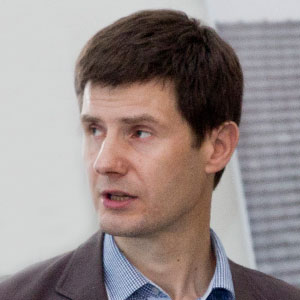
Dr inż. Bogdan Przybyła
Problems with diagnosing water pipes during the planning process for their technical rehabilitation
The selection of an appropriate renovation method and the calculation of suitable floor coverings must be based on reliable information, including the results of diagnostic tests. They allow conclusions to be drawn about the technical condition of the pipeline undergoing renovation and determine the impact on the designed lining. The presentation will cover specific problems encountered when inspecting water pipes and the potential consequences of this situation. The aim is to stimulate discussion and exchange of opinions on the principles of conducting such research and to reduce doubts arising from the use of specific methods of technical rehabilitation of water pipes.
Graduate of the Faculty of Civil Engineering, Wrocław University of Technology. Defended his doctoral thesis entitled: ‘Assessment and shaping of sewage pipe structures in terms of reliability theory’ (1999, Institute of Civil Engineering, Wrocław University of Technology). Participated in research internships at universities in Germany (Technische Unversität Dresden and Technische Hochschule in Münster). Currently Assistant Professor at the Department of Building Mechanics and Urban Engineering, Wrocław University of Technology.
He specialises in technical condition assessment and rehabilitation of water supply and sewage pipes. He is the author and co-author of expertises carried out at the Faculty of Construction at the Warsaw University of Technology, as well as numerous scientific and technical publications, including one compact monograph entitled. ‘Testing and assessment of the technical condition of sewage pipes’. For many years he has cooperated with the publishing house INŻYNIERIA sp. z o.o., being on the list of reviewers of the periodical ‘Inżynieria Bezwykopowa’.
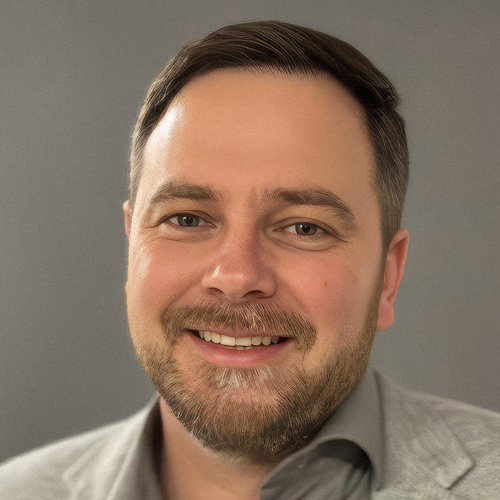
Jan Przybyła
UV LED technology in sewer network and manhole renovation – selection, application, implementation
Mateusz Saładziak
Overview of sewer well repair methods
Wells are a very important part of sewage systems, and the condition of the entire system depends on their condition. There are hundreds of thousands of wells in a medium-sized city. It is worth knowing how to keep them in full working order. In recent years, new repair technologies have emerged, and previously known ones have been significantly modified. The materials used for renovation often have significantly better parameters than those used to construct the wells. Thanks to new materials and technologies, repair times can be significantly reduced. Thanks to the innovations introduced, the well repair process will become better, faster, and cheaper.
Graduate of the Faculty of Management and Economics of Services at the University of Szczecin. With GAMM-BUD since 2022. Previously, for 7 years, Sales Department Manager at BKF Myjnie Bezdotykowe Sp. z o.o.
Paweł Sikorski
The water and sewage industry in the perspective of 2026 and beyond – challenges and directions for development
Attorney, graduate of Nicolaus Copernicus University in Toruń. Since 2008, he has been cooperating with the Polish Waterworks Chamber of Commerce, representing it before government administration bodies, among others. On behalf of the Chamber, he participated in the work of parliamentary committees. He co-authored and reviewed legal acts and documents sent for consultation by the European Federation of National Associations of Water Services (EurEau). As part of his legal services, he also advised water supply and sewage companies that are members of the IGWP. Since January 1, 2023, he has been the president of the Polish Waterworks Chamber of Commerce.
Tomasz Szczepański
Better sooner than later – delayed sewer chamber renovations. Case studies
The paper will discuss the causes of corrosion in wells and sewer chambers, methods of predicting the rate of corrosion processes, and the consequences of neglecting or delaying the renovation of such structures. Based on the analysis of several cases, the problem of monitoring, operation in conditions where the structure is approaching a state of emergency, and additional challenges related to restoring full technical efficiency after exceeding the technical limits of renovation will be presented.
Graduate of Warsaw University of Technology, Faculty of Civil Engineering, majoring in construction of building and engineering structures and postgraduate studies in trenchless technologies in environmental engineering at Kielce University of Technology. Designer with a licence to design in the construction and civil engineering specialisation without limitations.
For many years associated as a product manager for trenchless technologies and regional manager with construction chemicals manufacturer MC-Bauchemie Sp. z o.o., Co-founder of the Building Materials Laboratory at Centrum Badań i Certyfikacji Sp. z o.o., where he is responsible for the accreditation process and development of expert opinions. Currently, he also runs the TS Tomasz Szczepański Engineering Office, where he develops technical documentation on the diagnosis and assessment of the technical condition of reinforced concrete structures and renovation projects for water and sewage facilities and hydraulic engineering structures.
Prof. dr hab. inż. Adam Wysokowski
Benefits of using CIPP technology – economic and environmental perspective
CIPP (Cured In Place Pipe) is currently one of the most commonly used methods of trenchless renovation of sewer and water pipes. Its dynamic growth is driven not only by technological advances, but above all by the measurable economic and environmental benefits compared to traditional open-pit mining methods. The paper will present a comprehensive analysis of these benefits, covering both the direct costs of the works and the indirect costs incurred by infrastructure managers and users of public space.
In terms of economic benefits, we’ll talk about how CIPP tech can cut down on project time, reduce the amount of earthworks needed, lower resurfacing costs, and minimize traffic and environmental disruption. Attention will also be drawn to the possibility of extending the service life of existing pipes at a relatively low investment cost and to the favorable cost balance over the entire life cycle of the facility (LCC).
The conclusions from the analyses confirm that CIPP technology is an effective solution both from the point of view of investment economics and environmental protection, especially in densely built-up urban areas and with growing requirements to limit the negative impact of construction works on the environment.
Head of the Department of Roads and Bridges at the University of Zielona Góra. He specialises in the field of fatigue, durability, maintenance and inspection of bridges and traffic culverts, including soil-slab structures. He has been involved in research on these structures for many years. In recent years, he has also been more extensively involved in the drainage of roads and bridges and the technical problems of animal crossings in traffic construction. For many years he has also been active in the implementation of modern materials and technologies in road and bridge construction in our country. As part of this work, he has carried out numerous laboratory and field tests and conducted dozens of training cycles on the subject. The result of these long-standing activities are more than a dozen generally applicable recommendations and specifications in road and bridge practice developed with his participation, most often under his guidance. He is also credited with the implementation of modern concrete testing methods in traffic construction.
As part of his postdoctoral thesis, he developed a method for estimating the impact of corrosion on the load-bearing capacity of steel bridges, which was awarded by the Minister of Infrastructure. Author or co-author of over 150 publications and several monographs. For two terms, he was a member of the building materials section of the Civil Engineering Committee of the Polish Academy of Sciences. Since 1992, he has been a member of the PKN Standardization Committee No. 251 for bridge structures. Co-coordinator and participant in several research projects in the field of roads and bridges, carried out within the European Union (fatigue of modern road surfaces of various designs, delamination of concrete surfaces of motorways and bridges, research equipment in the field of transport in Europe, etc.). In 2000-2007, he was actively involved on the Polish side in the European Federation of Highway Research Laboratories (FEHRL), which resulted in, among other things, the development of the “Vision for Transport in Europe 2040.” He is a European Union expert on surface transport. For two terms, he was a member of the WC1-IABSE Structural Safety Commission based in Switzerland. He sits on the scientific councils of several national trade journals. He has organized or co-organized several seminars and conferences at the national level.
He began his teaching career at the Wrocław University of Technology in the field of transport engineering and bridge design. He currently continues his teaching activities at his alma mater, the University of Zielona Góra, where he lectures mainly on metal bridges and road and bridge research and materials science. His professional achievements include work in construction and design, expert opinions, training, coordination, and implementation of the Bridge Management System into widespread practice. He is a member of the Polish Bridge Engineers Association (ZMRP), the Polish Association of Construction Engineers and Technicians (PZITB), the International Association of Bridge and Structural Engineering (IABSE), and the American Society of Civil Engineers (ASCE).
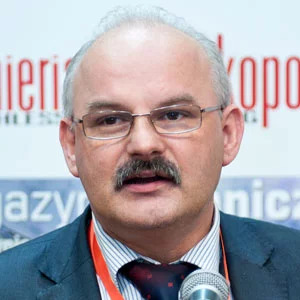
Dr inż. Dariusz Zwierzchowski
Research on CIPP resin lining renovation in terms of acceptance requirements
CIPP renovation linings, like all other construction solutions, are subject to mandatory testing after installation. These tests are usually specified in the design or tender documentation, and their results form the basis for the acceptance of renovation works.
From 1990 to 2010, he was employed as a research and teaching staff member at the Faculty of Civil Engineering and Environmental Engineering, Kielce University of Technology. Since 2010, he has been employed as a teaching staff member at the Faculty of Construction and Occupational Safety at the Higher Engineering School of Safety and Work Organization in Radom, and as President of the Management Board at the Research and Certification Center in Kielce. Author of numerous projects, expert opinions, technical opinions, and scientific publications. Co-organizer of national and international scientific and technical conferences, as well as supervisor of numerous diploma, engineering, and master’s theses.