
Conference Agenda
*The programme may still be subject to slight modifications.
9:00 – 10:00
Registration of participants
10:00 – 12:00
Session I
In this paper, I will attempt to present the development of trenchless sewer repair technologies over the last twenty years.
Paweł Kośmider
Opening of the conference
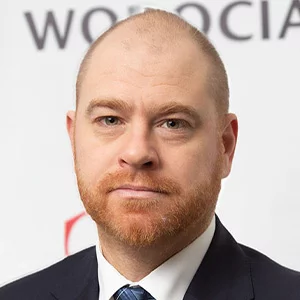
Paweł Sikorski
The water and sewage industry in the perspective of 2026 and beyond – challenges and directions for development
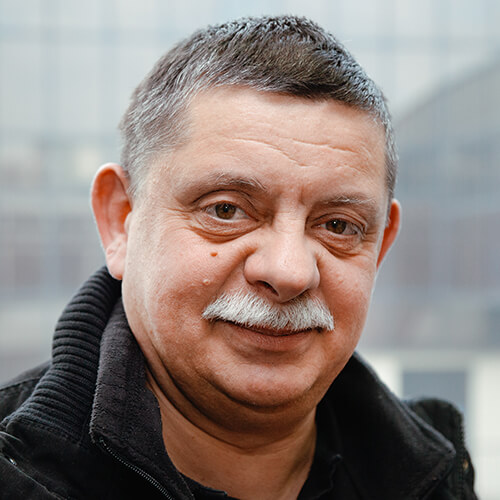
Michał Andrzejewski
One hundred issues of Trenchless Engineering, representing over twenty years of observing trenchless technologies. What has happened during this time?

Anna Adamek
The use of trenchless technologies in the rehabilitation of water and sewage networks – a case study of the city of Katowice. Methods, advantages, examples of rehabilitationMethods, advantages, examples of rehabilitation
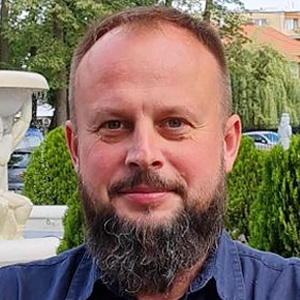
Marcin Łukaszewicz
Qualifying pipes for renovation. Is there a perfect solution?
Translated with DeepL.com (free version)
The presentation will highlight the role of intelligent water and sewage network management systems that integrate SCADA data, GIS, billing systems, and hydraulic models operating in real-time and predictive modes. The combination of classic operation with advanced data analytics allows for the stabilization of failure rates despite network development, reduction of water losses, and rationalization of investment and renovation costs.
Translated with DeepL.com (free version) Discussion with session participants
12:00 – 12:30
Coffee break
12:30 – 14:30
Session II
The selection of an appropriate renovation method and the calculation of suitable floor coverings must be based on reliable information, including the results of diagnostic tests. They allow conclusions to be drawn about the technical condition of the pipeline undergoing renovation and determine the impact on the designed lining. The presentation will cover specific problems encountered when inspecting water pipes and the potential consequences of this situation. The aim is to stimulate discussion and exchange of opinions on the principles of conducting such research and to reduce doubts arising from the use of specific methods of technical rehabilitation of water pipes. Graduate of the Faculty of Civil Engineering, Wrocław University of Technology. Defended his doctoral thesis entitled: ‘Assessment and shaping of sewage pipe structures in terms of reliability theory’ (1999, Institute of Civil Engineering, Wrocław University of Technology). Participated in research internships at universities in Germany (Technische Unversität Dresden and Technische Hochschule in Münster). Currently Assistant Professor at the Department of Building Mechanics and Urban Engineering, Wrocław University of Technology. UV LED renovation kits are becoming an increasingly accessible and popular technology, both among investors and contractors. Their popularity is due to, among other things, their versatility, energy efficiency, compact size, speed of implementation, high level of safety, and a number of other advantages that contribute to the effectiveness of the renovation process. The presentation addresses an issue that an increasing number of designers and contractors involved in trenchless works are encountering in practice – the lack of space to apply available technologies. In conditions of dense urban development, narrow road lanes, extensive underground infrastructure, and limited access to wells, it is increasingly not the technical parameters of devices, but their dimensions that determine the feasibility of an investment. The presentation will discuss why many commonly used trenchless technologies require space that is often unavailable in urban environments, and what consequences this has for the design and construction phases. Particular attention will be paid to situations where classic solutions are no longer possible, not for technological reasons, but purely for geometric ones. Against this background, a technological approach based on maximum reduction of the dimensions of the device and working facilities will be presented, enabling work to be carried out directly from well to well. The presentation will show how compactness is becoming a key technical parameter influencing the ability to maintain precision, work safety, and compliance with design specifications. Instead of comparing technologies in terms of power or performance, the presentation will focus on the actual field conditions in which the technology must fit—not the other way around. Examples will be presented of locations where limited working space determines the choice of a trenchless method or leads to the need to seek non-standard solutions. The presentation is technical and problem-oriented. Its aim is to show that in modern infrastructure construction, innovation increasingly involves adapting technology to the site of implementation rather than increasing the scale and size of equipment. Kompaktowość została tu potraktowana nie jako cecha marketingowa, lecz jako konkretna odpowiedź na ograniczenia, z którymi branża mierzy się na co dzień. Polypropylene modules or pipes as an effective, reliable, and long-lasting alternative for renovations and repairs of gravity sewers. Trenchless renovation of sanitary engineering facilities based on PREDL technology and methods provides modern, effective, and durable solutions to problems related to the technical degradation of sewerage networks and facilities. These methods allow for the rehabilitation of existing infrastructure without the need for excavation, which significantly reduces interference with existing infrastructure, lowers costs, and shortens the time needed to complete the investment. 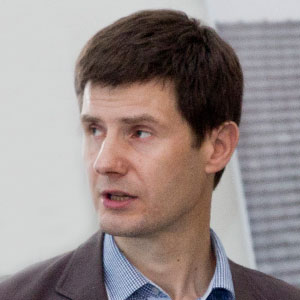
Dr inż. Bogdan Przybyła
Problems with diagnosing water pipes during the planning process for their technical rehabilitation
He specialises in technical condition assessment and rehabilitation of water supply and sewage pipes. He is the author and co-author of expertises carried out at the Faculty of Construction at the Warsaw University of Technology, as well as numerous scientific and technical publications, including one compact monograph entitled. ‘Testing and assessment of the technical condition of sewage pipes’. For many years he has cooperated with the publishing house INŻYNIERIA sp. z o.o., being on the list of reviewers of the periodical ‘Inżynieria Bezwykopowa’. 
Jan Przybyła
UV LED technology in sewer network and manhole renovation – selection, application, implementation

Krystian Frank

Beata Kwiatkowska
The uniqueness of gravity drilling technology – compactness as a response to space constraints in trenchless network construction

Jacek Kulig
Pipe modules for complete rehabilitation of gravity sewers
One might say that where the devil cannot help, polypropylene will!
This is indeed the case in the diameter ranges from DN 160 to DN 500, where modules with very high strength can be inserted into existing, leaky, and severely deformed pipelines to create a completely new channel.
They are extremely durable and essentially act as a new pipe.
An investment for 100 to 150 years that is sure to pay off.
Full rehabilitation of the canal with complete sealing guaranteed.
The installation itself is not complicated either, you just have to see it! See for yourself.
Otakar Cigler
Rehabilitation of pressure pipelines – Primus Line system. Presentation of the method based on projects completed in Poland.
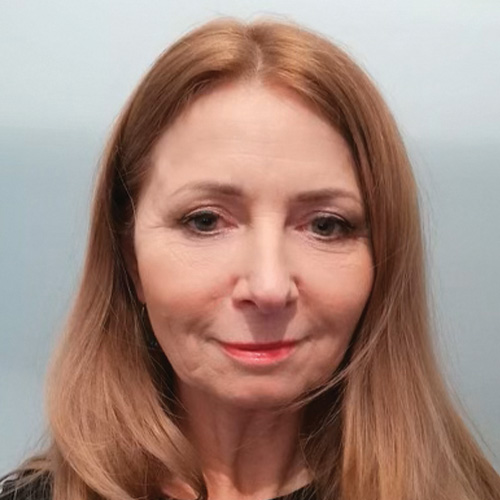
Jolanta Kaczmarek
Innovative methods of trenchless renovation of sanitary engineering structures
Discussion with session participants
14:30 – 15:30
Lunch break
15:30 – 16:45
Debate – From Problem to Solution
19:00 – 23:30
Networking dinner
Additional attractions: Driving simulator
10:00 – 12:15
Session III
CIPP (Cured In Place Pipe) is currently one of the most commonly used methods of trenchless renovation of sewage and water pipes. Its dynamic development results not only from technological progress, but above all from measurable economic and environmental benefits compared to traditional open-cut methods. The paper will present a comprehensive analysis of these benefits, covering both the direct costs of the works and the indirect costs incurred by infrastructure managers and users of public space. In terms of economic benefits, we'll talk about how CIPP tech can cut down on project time, reduce the amount of earthworks needed, lower resurfacing costs, and minimize traffic and environmental disruption. Attention will also be drawn to the possibility of extending the service life of existing pipes at a relatively low investment cost and to the favorable cost balance over the entire life cycle of the facility (LCC). The conclusions from the analyses confirm that CIPP technology is an effective solution both from the point of view of investment economics and environmental protection, especially in densely built-up urban areas and with growing requirements to limit the negative impact of construction works on the environment. Some of the materials used for pipeline renovation belong to the group of viscoelastic materials, which means that their strength changes over time. Two strength parameters are used to describe these materials: short-term and long-term. CIPP renovation linings, like all other construction solutions, are subject to mandatory testing after installation. These tests are usually specified in the design or tender documentation, and their results form the basis for the acceptance of renovation works. Advancing digitalization is changing the way underground infrastructure is planned, built, and maintained, including trenchless construction projects. The Trenchless 4.0 concept describes this process as a transition from traditional construction methods to an approach based on data, automation, and integrated process management throughout the entire infrastructure lifecycle. The presentation will show how digital transformation affects the organization of trenchless projects, the production processes of renovation linings, as well as quality control of works and technical and operational decision-making. The key benefits of implementing the Trenchless 4.0 concept will also be discussed, such as increased investment efficiency, reduced technical risk, shorter work times, and reduced costs and nuisance to the environment. 
Prof. dr hab. inż. Adam Wysokowski
Benefits of using CIPP technology – economic and environmental perspective

Dr inż. Beata Nienartowicz
Politechnika WarszawskaHow to interpret and control long-term material strength parameters in acceptance procedures
A proper understanding and interpretation of these parameters is essential to ensure that renovations provide long-term structural safety.
The presentation will explain the meaning of short-term and long-term parameters and their importance for the final result of the renovation.
Key aspects related to the control of these parameters at the acceptance stage will also be discussed.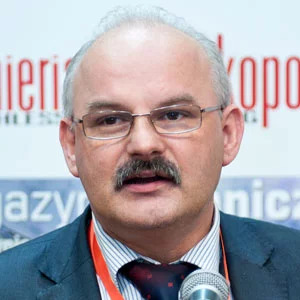
Dr inż. Dariusz Zwierzchowski
Research on CIPP resin lining renovation in terms of acceptance requirements
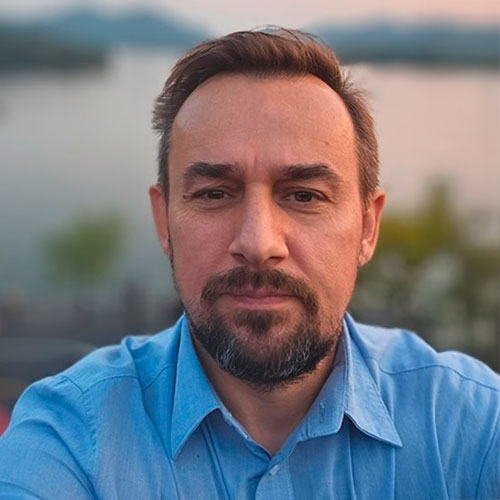
Michał Milczarek
Trenchless 4.0 – the digital transformation of the industry
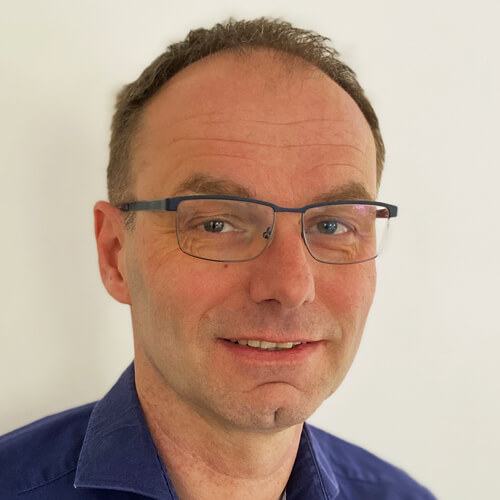
Kees den Besten
Next steps in sustainable Relining - market drivers & resin developments

Adrian Koziołek
Innovative methods for renovating and cleaning pressure pipelines
Discussion with session participants
12:15 – 12:35
Coffee break
12:35 – 14:35
Session IV
The basic measure ensuring the efficient functioning of sewer pipes is their periodic cleaning. This allows for maintaining hydraulic efficiency and enables a proper assessment of the technical condition during inspections. The paper will present the results of research aimed at introducing a cleaning strategy based on operational experience and knowledge of the condition of the sewerage network. The optimization of cleaning intervals is aimed at reducing costs, as unnecessary sewer cleaning is eliminated. The presentation discusses effective investment planning using trenchless technologies and ways to minimize design and construction risks. It shows where to start the task preparation process, how to analyze needs, and how to select the right technology. It explains the rules for corresponding with property owners and the importance of early site agreements. It shows how to create a risk analysis, diagnose potential threats, and reduce design errors. In the last part, it indicates how to proceed at the execution stage to ensure efficient implementation, quality control, and proper cooperation between participants in the construction process. The renovation of large-diameter collectors, characterized by large diameters or significant cross-sections in the case of non-circular profile channels, is one of the most demanding technical and technological challenges in the operation of sewage systems. This is due, among other things, to the limited availability of specialized trenchless technologies, the need to carry out work in difficult spatial conditions, and high health and safety requirements during work carried out on an active sewerage network. Significant structural loads, often large foundation depths, and varying technical conditions of structures require an individual design approach, close supervision of the works, and precise quality control at every stage of the renovation process. An additional challenge is the need to maintain continuity of sewage collection throughout the entire period of the works, which often involves the construction of complex bypasses or, if the technology used allows it, carrying out works “under flow.” Renovations of large-size collectors are usually carried out in dense urban areas, under streets and transport routes, often while maintaining active vehicle traffic, which significantly increases the complexity of the work and organizational requirements. In the case of combined sewers, an additional aspect is ensuring reliable wastewater collection during rainfall, which requires taking into account variable and often very high flows throughout the entire renovation process. The presentations will feature an excellent solution from Swiss company Flyability that is changing the current approach to sewer and manhole diagnostics: a drone that records 4K images and renders (rendering) the sewer in 3D using a LIDAR sensor with a resolution of over 1 million pixels per second. The presentations will feature an excellent solution from Swiss company Flyability that is changing the current approach to sewer and manhole diagnostics: a drone that records 4K images and renders (rendering) the sewer in 3D using a LIDAR sensor with a resolution of over 1 million pixels per second. The possibility of using AI for diagnostic description of the sewerage system using WinCan software will also be highlighted.
Dr inż. Andrzej Kolonko
Sewer pipe cleaning strategy
Translated with DeepL.com (free version) 
Anna Danek
Effective investment planning using trenchless technologies: strategies for minimizing project and execution risk
Translated with DeepL.com (free version) 
Piotr Fura
Size matters – renovation of large-scale collectors. A case study based on the example of the city of Wrocław
Mirosław Cecuga
Selected new products on the market of trenchless rehabilitation technology available from Sezam Instal
Wojciech Możdżeń
Strategic infrastructure management in urban sewerage systems.
Improving sewerage system efficiency through periodic service contracts for cleaning and trenchless rehabilitation. Case study: Craiova, Romania Discussion with session participants
14:35 – 15:30
Lunch break
15:30 – 16:50
Session V
The paper will present the possibilities of assessing the technical condition and monitoring of underground infrastructure (sewers and water pipes) using modern numerically assisted techniques and AI. Among other things, it will discuss the possibilities of using fiber optic techniques and contactless technologies based on image analysis. It will present the possibilities of using digital techniques and artificial intelligence to analyze measurement results when assessing the technical condition and monitoring of collectors and water pipes. Wells are a very important part of sewage systems, and the condition of the entire system depends on their condition. There are hundreds of thousands of wells in a medium-sized city. It is worth knowing how to keep them in full working order. In recent years, new repair technologies have emerged, and previously known ones have been significantly modified. The materials used for renovation often have significantly better parameters than those used to construct the wells. Thanks to new materials and technologies, repair times can be significantly reduced. Thanks to the innovations introduced, the well repair process will become better, faster, and cheaper. Water supply connection failures are a growing challenge for operators – in many systems, their number already exceeds the failure rate of distribution networks, and water losses are difficult to locate and repair. The most common types of damage, such as internal and external corrosion or pipe breaks, result from both the quality of materials and workmanship, as well as processes occurring during operation. Accumulated deposits of iron, manganese, or calcium gradually reduce the diameter of the pipes, lowering their transmission capacity. At the same time, progressive corrosion processes lead to a weakening of the pipe structure and an increased risk of failure. The paper will discuss the causes of corrosion in wells and sewer chambers, methods of predicting the rate of corrosion processes, and the consequences of neglecting or delaying the renovation of such structures. Based on the analysis of several cases, the problem of monitoring, operation in conditions where the structure is approaching a state of emergency, and additional challenges related to restoring full technical efficiency after exceeding the technical limits of renovation will be presented. 
Dr hab. inż. Paweł Popielski – prof. PW
Modern capabilities for monitoring underground infrastructure supported by numerical techniques and AI

Mateusz Saładziak
Overview of sewer well repair methods

Dr inż. Florian G. Piechurski
Problems with failures and water losses in water supply connections – methods of repair and replacement using trenchless techniques
The paper will present current data on the technical condition of connections and the most common causes of their damage. The expert will discuss why, in many cases, it is more cost-effective and efficient to use trenchless technologies instead of traditional open trench replacement. Participants will learn about the key criteria for selecting the right method – from technical and economic to social and environmental – and how proper diagnostics and analysis of the condition of the connection influence further operational decisions.
The presentation will also provide an overview of the most important methods of renovation and trenchless replacement, including the installation of various types of linings. Their advantages will be discussed: reduced earthworks, lower risk of interference with accompanying infrastructure, favorable hydraulic properties, and shorter completion times.
The presentation is aimed at water supply infrastructure managers, designers, and contractors who want to make informed choices about connection renovation methods and minimize the risk of failures and water loss. It is a practical summary of knowledge that will help you make more accurate investment and operational decisions. 
Tomasz Szczepański
Better sooner than later – delayed sewer chamber renovations. Case studies
Discussion with session participants
20:00 – 1:00
Formal banquet
Special attraction: Guitar Brother concert
9:00 – 11:00
Technical trip
Wycieczka do Muzeum Śląskiego